Why So Much ‘Respect’ for Vijayamma, Mr. Lokesh?
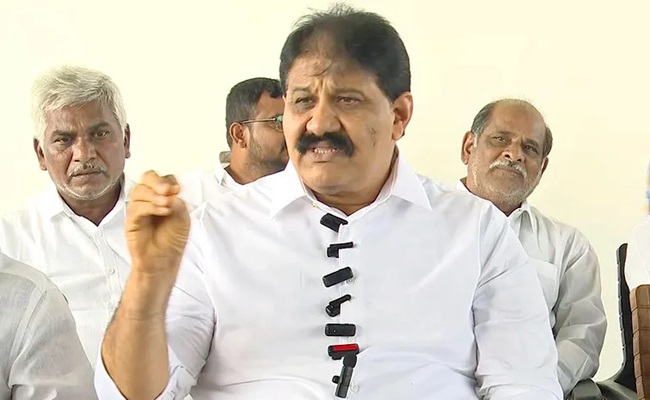
In a dramatic turn of events within the political landscape of Andhra Pradesh, Rachamallu Siva Prasad Reddy, a prominent spokesperson for the YSR Congress Party and former Member of the Legislative Assembly (MLA), has publicly taken aim at Nara Lokesh, the newly-appointed working president of the Telugu Desam Party (TDP) and the Andhra Pradesh Minister for Information Technology. The criticism came on Monday, as Reddy questioned Lokesh’s newfound affection for Y.S. Vijayalakshmi, the respected mother of YSRCP president Y.S. Jagan Mohan Reddy.
The Context of the Criticism
Reddy’s remarks were ignited by Lokesh’s recent statements that appeared to show an unexpected admiration for Vijayamma, as she is fondly referred to by her supporters and constituents. This sudden pivot in Lokesh’s rhetoric has raised eyebrows among political analysts and activists alike, leading many to speculate on the motives behind such public displays of regard for a figure who is a symbol of resilience and strength within the YSR Congress Party.
Political Opportunism or Genuine Respect?
During a press conference, Reddy asserted that Lokesh’s expressions of ‘respect’ towards Vijayaltyshmi could be interpreted as a strategic maneuver rather than a sincere acknowledgment of her contributions. “Why the sudden love for Vijayamma? Is it an attempt to garner sympathy from the public or a calculated move to wrestle support away from Y.S. Jagan Mohan Reddy?” he queried, suggesting that such gestures are typical of politicians maneuvering for an advantage in the competitive political arena.
The dynamics between the YSRCP and TDP have been fraught with tension, particularly since Jagan Mohan Reddy became Chief Minister in 2019. Political observers note that any attempts by the TDP to bridge the chasm between the two parties could be seen as an indication of their desperation to regain lost ground in Andhra Pradesh’s political structure.
The Legacy of Y.S. Vijayalakshmi
The legacy of Y.S. Vijayalakshmi extends beyond her familial ties; she has been a significant figure in the state’s politics, known for her efforts to support welfare initiatives and uplift marginalized communities. Her personal story, intertwined with the tragic demise of her husband, former Chief Minister Y.S. Rajasekhara Reddy, has cemented her status as a revered personal figure among voters.
Hence, the salutation of ‘respect’ towards her by Lokesh appears laden with implications, prompting questions of sincerity and intent in a politically charged environment. As this narrative unfolds, the implications of such political gestures could have lasting impacts on electoral dynamics in Andhra Pradesh.
Conclusion
As political tensions escalate and the battle for public opinion intensifies, the actions of leaders like Nara Lokesh will undoubtedly remain under scrutiny. Whether this is a smart political gambit or merely an unremarkable moment in the ebb and flow of politics remains to be seen. However, one thing is certain: in the world of politics, much can be said about the intentions behind the words we choose.