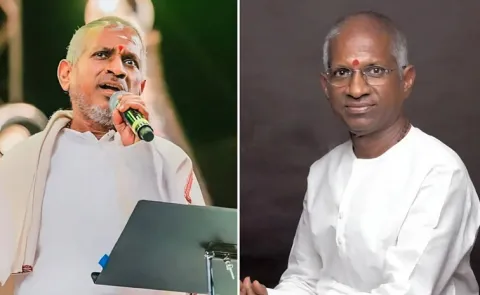
Ilaiyaraaja, the iconic music composer known for his unforgettable melodies, has recently faced a significant setback in his ongoing legal battles concerning copyright issues. Renowned for delivering exceptional songs across numerous films in the 90s and 2000s, Ilaiyaraaja’s illustrious career has now entered a challenging phase, as he grapples with court cases that have emerged over copyright claims.
In recent years, several filmmakers have found themselves entangled in legal disputes with Ilaiyaraaja, who has been accused of infringing on copyright by using songs that he had previously licensed to audio companies such as Saregama. The Delhi High Court has recently issued a ruling that has left the composer in a precarious position. This ruling comes in the wake of a dispute that began last year with the release of the film “Agathya,” which led to a court case between Ilaiyaraaja and Saregama.
The court’s interim order explicitly states that Ilaiyaraaja cannot use songs from 134 films that were produced between 1976 and 2001 without the permission of Saregama. These songs were sold to the audio company on a permanent basis by the respective producers, granting Saregama full rights over them. Despite some permissions that Ilaiyaraaja had previously granted to certain music streaming platforms for using specific tracks, the latest court ruling clarifies that he no longer holds any rights to these songs.
This ruling is a major blow for Ilaiyaraaja, who has built a legacy on his musical contributions to the Indian film industry. The Delhi High Court emphasized that Saregama retains exclusive rights to the songs, and Ilaiyaraaja cannot use them without the company’s consent. The implications of this ruling mean that the composer may face considerable limitations in his ability to perform or utilize these iconic tracks moving forward.
As the situation unfolds, Ilaiyaraaja’s fans and the film industry are left to ponder the impact of this legal development on his future projects. The composer, once celebrated for his ability to create timeless music regardless of language or genre, now faces a landscape where his past works may be restricted. The outcome of this case could set a precedent for how copyright issues are handled in the music industry, particularly for artists who have long enjoyed the freedom to use their own creations.
While the Delhi High Court’s decision has undoubtedly shaken Ilaiyaraaja and his supporters, it also underscores the importance of copyright laws in protecting the rights of producers and music companies. As the legal battle continues, the music community watches closely, hoping for a resolution that honors the contributions of one of India’s most beloved composers while respecting the rights of those who hold the licenses to his work.