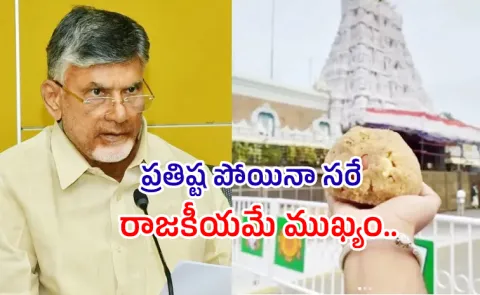
The controversy surrounding the Tirumala laddu prasadam has reignited, with former Chief Minister N. Chandrababu Naidu vocally defending himself against accusations regarding the use of animal fat in the sacred offering. Following the Supreme Court’s directive to investigate through a Special Investigation Team (SIT), which confirmed the absence of animal fat in the laddus, Naidu has returned to the political arena, seemingly unfazed by the implications of the situation.
Despite acknowledging the potential harm to the sentiments of millions of Hindus, Naidu’s recent statements suggest a dismissive attitude towards the matter. Reports indicate that he has instructed his party ministers and cadre to propagate the narrative that the prasadam was indeed adulterated. As ministers scramble to make public statements, social media campaigns led by Naidu’s son, Nara Lokesh, are targeting rival Y.S. Jagan Mohan Reddy and his party, the YSRCP, with misleading images and rhetoric.
During a recent tour in Kuppam, Naidu claimed that YSRCP leaders intended to drag the deity, Lord Venkateswara, into a market setting, a statement that has drawn criticism for its provocative nature. In response to questions about whether he would apologize, Naidu’s retorts were dismissive, further complicating the narrative surrounding the laddu controversy. Questions have emerged about the origins of the claims regarding animal fat, as multiple media outlets continue to circulate allegations without substantial evidence.
Critics argue that publications like Eenadu and Andhra Jyothy are complicit in spreading false narratives to bolster the fortunes of the Telugu Desam Party (TDP). They contend that these outlets, which once questioned the quality of the laddu prasadam under Naidu’s administration, are now attempting to downplay the significance of the SIT’s findings. The hypocrisy of these media organizations comes under scrutiny, especially when their past reports contradicted their current stance.
Naidu’s administration has faced scrutiny not only for the laddu issue but also for past incidents involving the Tirumala Tirupati Devasthanams (TTD). There are allegations that TDP officials mishandled the procurement processes regarding ghee and other offerings, raising further questions about accountability. The public’s faith in the TTD’s integrity has been shaken, and the ongoing battle for narrative control reflects deeper political tensions.
The timing of these accusations and counter-accusations suggests a strategic maneuvering by Naidu, aiming to divert attention from the SIT’s findings. The political landscape remains charged, with both sides accusing each other of engaging in dirty politics. Naidu’s historical tendency to retaliate against perceived slights is evident, and his tactics appear aimed at rallying support amidst growing dissent.
As the debate rages on, the implications of the laddu controversy extend beyond the political sphere, touching on the cultural and spiritual fabric of the Hindu community. The public’s trust in religious institutions is at stake, and the unfolding drama may have long-lasting effects on political alliances and voter sentiment in the region.
In conclusion, the saga surrounding the Tirumala laddu prasadam is far from over, with all eyes now on how Naidu and his opponents will navigate this treacherous political landscape. The stakes are high, and the narrative continues to evolve as both sides strive to gain the upper hand in this contentious battle.