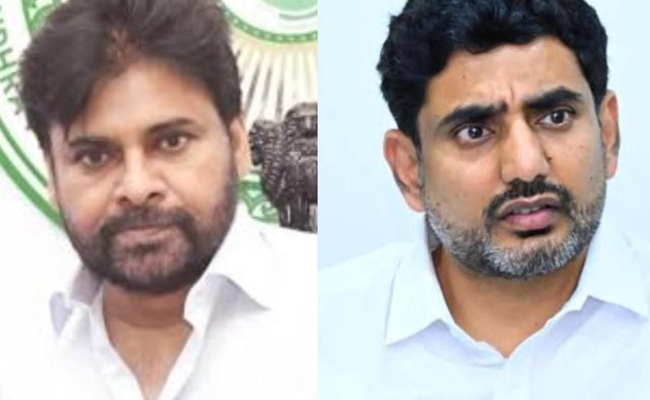
Nara Lokesh, the general secretary of the Telugu Desam Party (TDP) and Andhra Pradesh’s information technology minister, is reportedly making significant efforts to win over Pawan Kalyan, the president of the Jana Sena Party (JSP) and the state’s deputy chief minister. This move comes as Lokesh seeks to clear potential political hurdles in his ambition to succeed his father, N. Chandrababu Naidu, as the party’s leader.
In recent weeks, the political landscape in Andhra Pradesh has become increasingly complex, with alliances and rivalries taking shape among various parties. Lokesh’s overtures toward Kalyan indicate a strategic maneuver to solidify support from the JSP, which has been gaining traction among voters disillusioned with the current administration. Sources close to Lokesh suggest that he views Kalyan not just as a political ally but also as a vital asset in rallying grassroots support across the state.
Analysts believe that Lokesh’s attempts at appeasement are a response to the evolving political dynamics and the growing influence of Kalyan in Andhra Pradesh. As elections approach, the collaboration between TDP and JSP could prove crucial for both parties. Kalyan, whose popularity has surged in recent months, has the potential to sway a considerable voter base, making his endorsement a valuable prize for Lokesh.
Speculation is rife about the nature of the discussions between the two leaders, with several party insiders hinting at possible policy alignments and joint initiatives aimed at addressing pressing issues facing the state. The potential partnership could also focus on economic development, job creation, and technological advancements, areas of mutual interest that resonate with the electorate.
While both parties have historically been rivals, the shifting political tides have led to a reconsideration of alliances. Observers note that Lokesh might be looking to leverage Kalyan’s influence to counteract challenges posed by other political factions, particularly the Yuvajana Sramika Rythu Congress Party (YSRCP), which currently holds a significant majority in the state assembly.
As the political climate continues to evolve, the relationship between Lokesh and Kalyan will likely be closely monitored by constituents and political analysts alike. Should they manage to forge a successful alliance, it could not only bolster Lokesh’s chances of succeeding his father but also reshape the political future of Andhra Pradesh.
In conclusion, as Nara Lokesh seeks to navigate the intricate political landscape of Andhra Pradesh, his efforts to appease Pawan Kalyan could mark a pivotal moment for both the TDP and JSP. The coming months will reveal whether this alliance can translate into electoral success or if the challenges ahead will prove insurmountable for Lokesh in his quest for leadership.