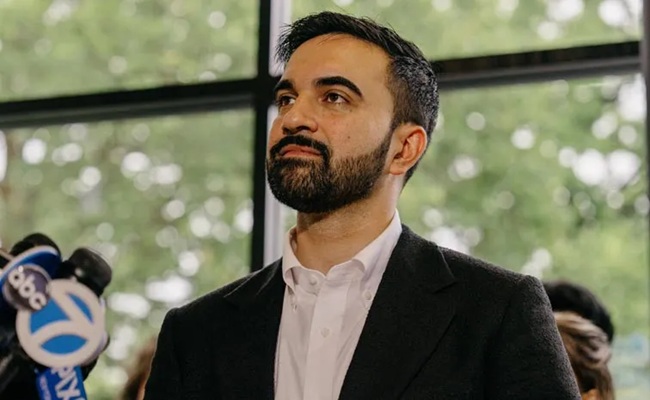
In a remarkable turn of events, Zohran Mamdani, the son of renowned Indian filmmaker Mira Nair, has emerged as a prominent figure in the political landscape of New York City. His recent election to the City Council has not only garnered attention but also sparked conversations about the shifting dynamics of American politics. Mamdani’s campaign resonated with many voters who felt disillusioned with the status quo, reflecting a growing sentiment of anti-incumbency that has taken root across the United States.
Mamdani’s journey to political office is as compelling as his lineage. Raised in a household that celebrated creativity and social justice, he has drawn upon his diverse background to craft a message that resonates with a broad spectrum of constituents. His ability to connect with voters on issues such as affordable housing, public transportation, and racial justice has positioned him as a refreshing alternative to established politicians. As a progressive voice, Mamdani has successfully harnessed the frustrations of the electorate, channeling them into a powerful narrative that speaks to the urgency of change.
During his campaign, Mamdani tackled the deep-seated issues that have plagued New York City for decades. He openly criticized the city’s handling of housing crises and advocated for systemic reforms that prioritize the needs of marginalized communities. His approach has been characterized by a blend of grassroots activism and a keen understanding of the political machinery, allowing him to cut through the noise and engage voters on a personal level. This strategy has resonated particularly with younger voters who are increasingly disenchanted with traditional political practices.
Moreover, Mamdani’s ability to articulate a vision for a more equitable future has struck a chord not just in New York but across the nation. His election symbolizes a potential shift in the political landscape, where the voices of new generations are becoming more prominent. Many analysts believe that his success could inspire a wave of similar candidates, challenging the longstanding power structures that have dominated American politics for years.
As Mamdani steps into his role as a City Council member, the expectations are high. Observers are keen to see how he will navigate the complexities of governance while remaining true to his progressive ideals. His commitment to transparency and community engagement will be tested as he addresses the pressing issues facing his constituents. If his early actions in office reflect his campaign promises, Mamdani could indeed become a transformative figure in New York politics.
In conclusion, Zohran Mamdani’s ascent to the City Council is more than just a personal triumph; it signifies a broader demand for change within American politics. By challenging entrenched conventions and advocating for the needs of the people, Mamdani represents a new generation of leaders who are ready to reshape the political landscape. As his story unfolds, the eyes of the nation will be watching closely, eager to see how this son of an Indian filmmaker will impact the future of New York City and beyond.