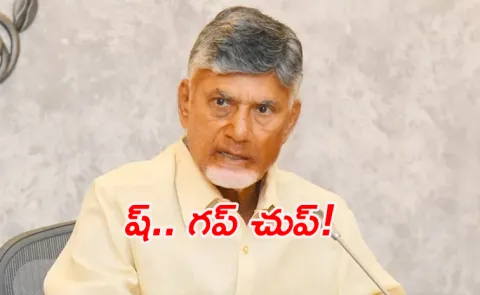
The political landscape in Andhra Pradesh is witnessing significant shifts, particularly with the Telugu Desam Party (TDP) founder and former Chief Minister N. Chandrababu Naidu’s recent silence on critical issues concerning the central government. Historically, Naidu has not hesitated to criticize the central authorities, including prominent leaders like Indira Gandhi and Rajiv Gandhi, when it came to matters affecting the state. However, his current inaction raises eyebrows, especially in light of his previous vocal opposition to the federal government’s policies.
Once a fierce critic of the central government, Naidu has now seemingly adopted a more subdued approach, leading many to question his political strategy as the 2024 elections approach. Previously, he openly condemned the reductions in funding for southern states, but now, he appears to be at a loss for words amid significant cutbacks in funds allocated to Andhra Pradesh under various schemes, including the rural employment guarantee scheme.
The TDP’s alliance with the Jana Sena led by Pawan Kalyan has not yielded the expected vocal resistance against the central government. In the past, both Naidu and Kalyan have criticized Chief Minister Jagan Mohan Reddy for failing to confront the central government effectively when they were in opposition. However, the current scenario presents a stark contrast, as both parties seem hesitant to vocalize their grievances despite their combined strength of 17 Members of Parliament.
Reflecting on Naidu’s past, one can recall his demands for increased financial assistance to the state during the tenure of Prime Minister Atal Bihari Vajpayee and his assertions about receiving large quantities of rice through government schemes. His eloquence in negotiating with the central government was once a hallmark of his leadership. Now, however, there seems to be a puzzling silence regarding the adverse impacts of new central policies on state finances, including a significant drop in allocations for national health missions and rural development schemes.
Recent reports indicate that the expected central assistance of ₹34,000 crore has dwindled to just ₹7,000 crore in the first nine months of the fiscal year, raising concerns about the state’s financial health. Moreover, the shifting responsibilities of various welfare schemes to the state level have placed additional burdens on Andhra Pradesh, with expectations that these changes could lead to an annual financial strain of nearly ₹4,500 crore.
While opposition parties like the Congress have raised alarms over these developments, Naidu’s reticence has sparked questions about his political motives. His party’s MP, Lavu Sri Krishna Devarayalu, has expressed concerns in the Lok Sabha but has simultaneously acknowledged the financial constraints faced by the state, sparking further debate about the TDP’s position as a national party.
In stark contrast, the Jana Sena MP Balashouri has welcomed the central proposals, while YSR Congress MP Avinash Reddy has openly criticized the potential withdrawal of crucial employment schemes, labeling it a conspiracy against the poor. This division within the opposition raises doubts about their collective strength in challenging the central government’s policies.
The recent dynamics also reflect the changing stance of political leaders. Pawan Kalyan’s comments regarding the privatization of the Visakhapatnam steel plant, made in the presence of Prime Minister Modi, underline the nuanced approach that opposition leaders are adopting. While they once fervently opposed such moves, current political realities seem to bind them in a complex web of compromises.
As the political scene unfolds, the question remains: is Naidu’s silence a strategic retreat or a response to fears of political repercussions? Whether it is due to concerns about his legal challenges or a calculated decision for the future, the implications of his current stance will undoubtedly shape the narrative leading up to the 2024 elections.


