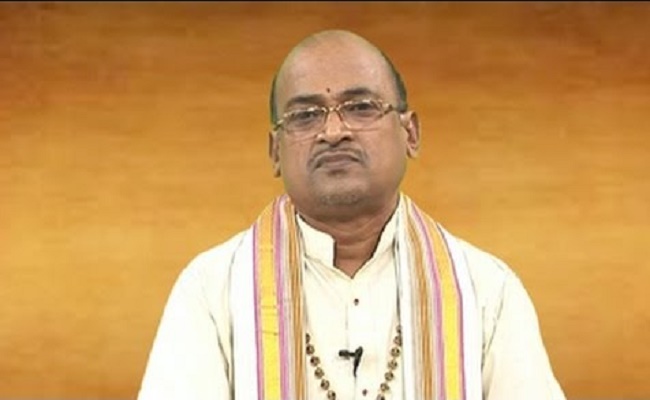
Noted spiritual speaker and scholar Garikapati Narasimha Rao has ignited controversy with his recent suggestion that the state of Andhra Pradesh be renamed Telugu Nadu. This proposal, reminiscent of the naming conventions of other Indian states such as Tamil Nadu, has drawn significant backlash from various quarters, with critics arguing that the suggestion undermines the historical and cultural significance of the existing name.
Garikapati’s remarks came during a public discourse aimed at fostering regional pride and identity among Telugu-speaking people. He argued that the term “Andhra Pradesh” gives the impression of being associated with northern Indian states like Uttar Pradesh, diluting the distinctiveness of the Telugu culture. His intent, he claimed, was to promote unity and pride among the Telugu-speaking population, but the response has been anything but unifying.
Opponents of the proposal quickly took to social media and public forums to voice their concerns. Many believe that a name change could lead to unnecessary confusion and potentially alienate those who identify strongly with the current name, which has been in use since the formation of the state in 1956. Critics have labeled Garikapati’s suggestion as an oversimplified solution to a complex issue of identity and regional pride.
Political leaders from various parties have also weighed in on the matter, with some expressing their disapproval of the idea. “Andhra Pradesh has its own identity and history that should be respected,” remarked a local politician, adding that the focus should instead be on addressing pressing issues within the state rather than renaming it. This sentiment resonates with many who feel that the state’s name is deeply tied to its cultural heritage and economic identity.
Supporters of Garikapati, however, argue that a name change might not be entirely out of the question, especially if it could strengthen the cultural ties among Telugu speakers. They point to other Indian states that have undergone name changes to better reflect their linguistic and cultural identities. Yet, this perspective remains contentious, with arguments centering around the practicality and implications of such a transition.
The debate has also sparked a broader discussion on regional identities and the significance of names in shaping public perception and cultural pride. While some advocate for a name that resonates with the linguistic identity of the people, others caution against the potential backlash and division that could arise from such changes.
As the discussions continue, it remains to be seen whether Garikapati’s suggestion will gain traction or be relegated to the annals of public discourse. What is clear, however, is that the conversation surrounding the identity of Andhra Pradesh is far from settled, and it reflects the complex interplay of culture, politics, and regional pride that defines the Indian landscape.