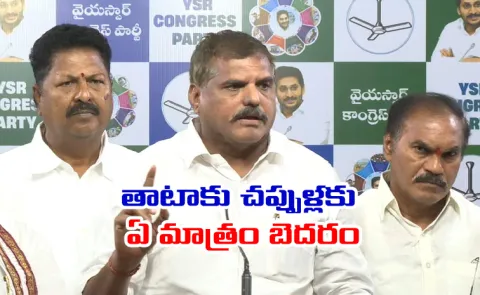
In a shocking incident that has raised serious concerns about law enforcement and political safety, former minister Ambati Rambabu was attacked, prompting strong reactions from various political figures. Bhuma Karunakara Reddy, former chairman of the Tirumala Tirupati Devasthanams (TTD), condemned the attack, claiming it represents an assault on democracy itself. He questioned the presence of police during such a brazen act of violence, asking, “What kind of negligence is this?”
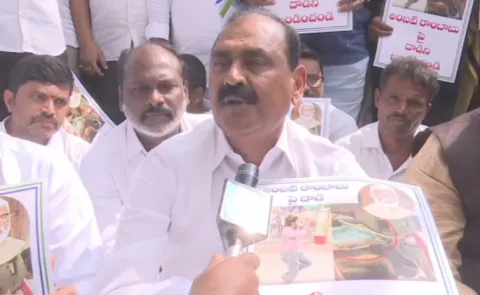
The incident took place near Rambabu’s residence in Padmavati Puram, where Bhuma staged a protest, sitting on the road to voice his dissent. He emphasized that Ambati Rambabu is a well-respected leader in both Telugu states and described the attack as “extremely heinous and despicable.” Bhuma alleged that the attack was orchestrated with the intention of destroying property linked to Rambabu, indicating a deeper plot behind the violence.
Bhuma’s remarks were pointed as he condemned the inappropriate comments made by leaders and workers from the Telugu Desam Party (TDP) against Rambabu. He stated that these individuals should feel ashamed for their derogatory remarks. “The truth of his words stands firm,” Bhuma remarked, referring to Rambabu’s previous statements that may have triggered the aggression.
In addition to the physical assault, property associated with Rambabu was reportedly vandalized, raising questions about the accountability of those in power. “Those in government should act responsibly. Can they continue to behave with such indifference?” Bhuma questioned, as he expressed disbelief over the lack of protection afforded to political figures.
The attack has drawn widespread condemnation, highlighting the growing atmosphere of political hostility in the region. Bhuma accused a “murderous gang” of conducting these attacks out of vengeance, suggesting that there is a systematic effort to target leaders from the Kapu community in particular. He also noted that flex banners related to the ongoing Ladoo controversy were being prominently displayed in every mandal center, indicating a coordinated effort against certain groups.
As tensions escalate, the focus remains on the government’s response to this incident and the broader implications for political safety and discourse in the state. The attack on Ambati Rambabu serves as a stark reminder of the volatile nature of political rivalries in the region and the urgent need for effective governance and protection of public figures.
In conclusion, the incident has not only sparked outrage among political leaders but also raises critical questions about the safety of public officials and the role of law enforcement during politically charged conflicts. The demand for accountability is growing, and many are calling for immediate actions to ensure such incidents do not recur in the future.