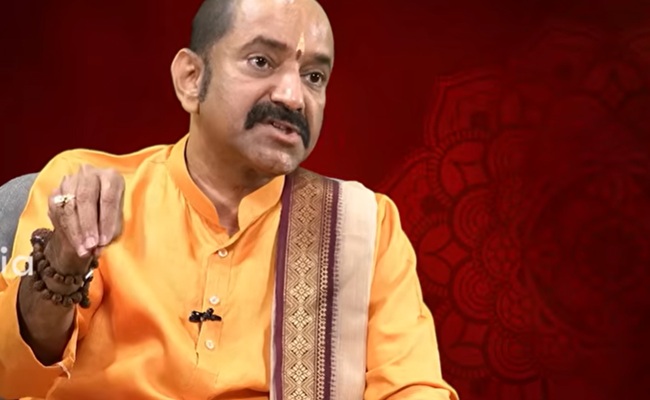
LV Gangadhara Sastry, a prominent singer and revered spiritual figure known for his deep connection with the Bhagavad Gita movement, has made headlines following his recent comments about renowned filmmaker SS Rajamouli. The clash between the two popular figures has drawn the attention of fans and communities alike, as Sastry openly criticized Rajamouli’s approach to storytelling and artistic expression.
Rajamouli, famed for blockbuster hits such as “Baahubali” and “RRR,” is recognized for his innovative storytelling and visual grandeur. Yet, Sastry’s remarks suggest a discord between cinematic modernity and traditional spiritual values. By invoking the Bhagavad Gita, Sastry calls upon filmmakers to integrate deeper moral philosophies, rather than merely relying on spectacular visuals for storytelling.
The response to Sastry’s critique has been mixed. While many fans of the spiritual leader commend him for safeguarding cultural integrity, others, particularly those in the film industry, view his comments as a dismissal of artistic freedom. Rajamouli, who has cultivated a massive following thanks to his engaging narratives, might find this critique particularly challenging, given his success in introducing Indian cinema to global audiences.
Social media platforms have become the battleground for supporters and detractors. Hashtags related to both personalities have trended, with fans passionately defending their favorite figure. Some argue that Sastry’s perspective is vital for maintaining cultural heritage, while others feel that contemporary cinema should embrace creative liberties without constraints.
The debate raises significant questions about the role of cultural representations in modern media. Are filmmakers responsible for upholding traditional values, or should they have the freedom to reinterpret narratives in innovative ways? Sastry’s comments resonate deeply within many Hindu communities that regard the Bhagavad Gita as an essential guiding text, emphasizing the need for moral grounding in artistic endeavors.
As the discussion unfolds, it becomes evident that this is more than just a spat between two influential figures; it is a reflection of the broader societal dynamics at play. The tension between tradition and modernity, spirituality and artistry, is palpable. It remains to be seen how Rajamouli will respond to Sastry’s bold remarks and whether this discourse will influence future film projects.
Ultimately, the exchange between LV Gangadhara Sastry and SS Rajamouli shines a light on the cultural fabric of Indian society. It challenges filmmakers to reflect on their narratives and consider their impact on audiences, especially in an age where stories wield immense power over perceptions and beliefs. As this conversation continues, many are eager to see what the future holds for both cinema and the spiritual philosophies that inspire it.