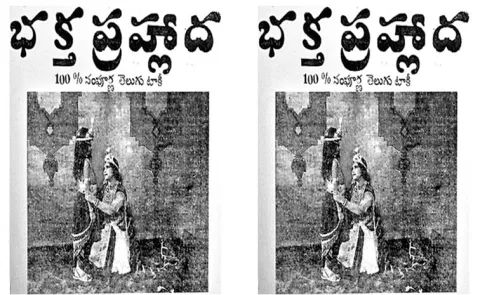
Today marks a significant milestone in the history of Telugu cinema as it celebrates the 94th anniversary of its first full-length film, “Bhakta Prahlada,” which was released on February 6, 1932. This landmark event has been recognized in the film industry for several years as “Telugu Cinema Day,” commemorating the birth of an influential medium that has captivated audiences for generations.
<p”Directed by H.M. Reddy, “Bhakta Prahlada” marked the beginning of full-length Telugu talkies, a genre that transformed the cinematic landscape in the region. Before this film, the cinematic offerings were primarily silent movies that lacked dialogue and music, which, while visually engaging, did not resonate with the linguistic identity of the audience. The arrival of talkies allowed for a new era of storytelling, where language and culture could be authentically represented on screen.
The journey towards this momentous occasion began with the release of “Alam Ara,” India’s first talkie, in Hindi and Urdu on March 14, 1931. Following this groundbreaking film, various Indian languages began to embrace the talkie format. H.M. Reddy, who had worked on “Alam Ara,” directed “Kalidasa,” the first South Indian talkie, just seven and a half months later, establishing a precedent for Telugu cinema.
It is noteworthy that “Kalidasa,” which premiered in Madras on October 31, 1931, was the first film to feature Telugu dialogues and songs, thus marking a historic moment for the culture. Shortly thereafter, Reddy embarked on the production of “Bhakta Prahlada,” which was notably a 100% complete Telugu talkie. The film underwent censorship on January 22, 1932, before being released to the public on February 6, making it a trailblazer in the industry.
Produced at a modest budget of 18,000 rupees and completed in just 18 days, “Bhakta Prahlada” was adapted from a popular play by Dharmavaram Ramakrishnamacharya and featured performances from renowned actors of the Surabhi Theatre Company. The music for the film was composed by Chandala Keshavadasu, who gained recognition as the first Telugu lyricist. The roles of Hiranyakashipu and his wife Leelavathi were portrayed by Munipalle Subbayya and Kamala Bai, respectively, while Master Krishna Rao played the lead role of Prahlada. Notably, L.V. Prasad, who later became a prominent figure in Telugu cinema, also appeared in the film.
The premiere of “Bhakta Prahlada” took place at Krishna Cinema Hall in Bombay, followed by screenings in Vijayawada and Rajahmundry, eventually reaching Madras by April 2. Audiences, accustomed to silent films and stage plays, were mesmerized by the sight of moving images that spoke, sang, and danced in their native Telugu language. The release of both “Kalidasa” and “Bhakta Prahlada” created a sensation that forever changed the fabric of Telugu cinema.
Over the decades, Telugu cinema has evolved significantly, transcending regional boundaries and gaining international acclaim. With recent successes such as “RRR,” which even garnered an Academy Award, the Telugu film industry continues to make its mark on the global stage. From classics like “Mallishwari” and “Shankarabharanam” to modern blockbusters like “Baahubali” and the upcoming “Varanasi” directed by Rajamouli and featuring Mahesh Babu, the journey of Telugu cinema remains a testament to the creativity and resilience of its storytellers.