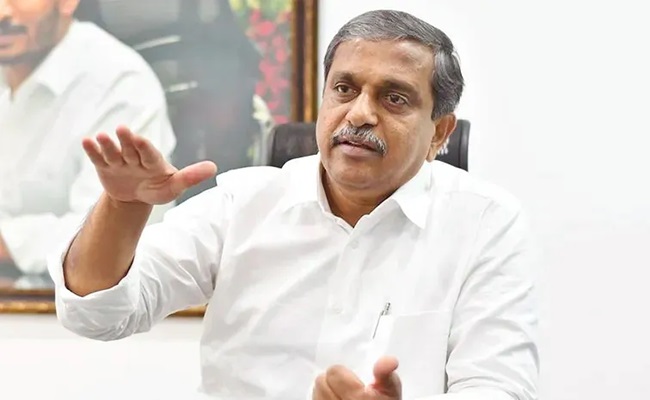
In a recent development regarding the alleged liquor scam that has stirred political tensions in Andhra Pradesh, YSRCP state coordinator Sajjala Ramakrishna Reddy has come forward to defend his son, Sajjala Bhargav. On Thursday, Ramakrishna Reddy dismissed the accusations leveled against Bhargav as unfounded, labeling them as a “total fabrication of lies” orchestrated by the TDP-led coalition government and its associated media.
The allegations have been a significant topic of discussion in the state’s political arena, with opposition parties seizing the opportunity to call into question the integrity of the YSR Congress Party (YSRCP). However, Sajjala Ramakrishna Reddy firmly stood his ground, asserting that the charges are nothing more than a politically motivated attack aimed at tarnishing the reputation of his family and the ruling party.
Ramakrishna Reddy emphasized that the accusations against his son lack any credible evidence and are merely a product of the opposition’s desperate attempts to regain political ground. He stated, “This is a clear-cut example of how the TDP and its allies are trying to divert attention from their failures by concocting stories that have no basis in reality.” His comments highlight the ongoing rivalry between the YSRCP and the TDP, which has been marked by numerous allegations and counter-allegations in recent months.
As the political landscape continues to evolve, the YSRCP remains steadfast in its commitment to addressing issues of governance while countering what it perceives as baseless attacks. Ramakrishna Reddy’s defense of his son reflects a broader strategy by the ruling party to maintain its narrative and bolster public confidence in its leadership.
Political analysts suggest that such accusations and their subsequent rebuttals are indicative of the high stakes involved in Andhra Pradesh’s political scene. With elections on the horizon, both parties are fiercely competing for public support, and the handling of these controversies will likely play a crucial role in shaping voter perceptions.
In the wake of these developments, it remains to be seen how the allegations will impact the political dynamics in Andhra Pradesh. The YSRCP appears determined to rally its supporters and counter the narrative pushed by the opposition. As the situation unfolds, all eyes will be on how both parties navigate these turbulent waters leading up to the elections.
In conclusion, while Sajjala Bhargav stands accused in the liquor scam, his father’s bold dismissal of the charges underscores the intense political maneuvering underway in the state. The unfolding drama serves as a reminder of the complexities of regional politics in India, where accusations can swiftly become a tool for both defamation and defense.