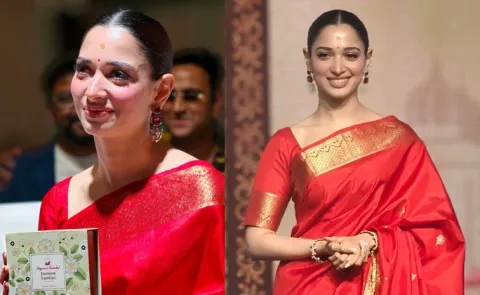
The recent appointment of actress Tamannaah Bhatia as the brand ambassador for Karnataka’s famed Mysore Sandal Soap has ignited a political and social debate in the region. Known for its rich history spanning over a century, the soap is produced by the Karnataka Soaps and Detergents Limited (KSDL), a state-owned enterprise. The decision to choose Tamannaah, a prominent actress in the Indian film industry, has raised eyebrows, leading to discussions among political parties and social media users alike.
Karnataka’s Minister for Large and Medium Scale Industries, M.B. Patil, announced that the collaboration aims to relaunch the Mysore Sandal Soap in the marketplace. He highlighted that selecting Tamannaah, who boasts over three million followers on social media, is part of a strategic move to capture a larger audience, particularly in North India. Patil emphasized that the choice is intended to boost demand for KSDL’s products, showcasing the soap’s global appeal.
However, this announcement has not been without its critics. Many netizens and Kannada organizations have expressed their discontent over the decision to appoint a non-Kannada actress as the brand ambassador. They argue that numerous talented actresses from Karnataka, such as Rashmika Mandanna and Deepika Padukone, could have been chosen instead. The backlash has been particularly vocal on social media platforms, where users have questioned why local talents were overlooked in favor of Tamannaah, who hails from a different film industry.
In response to the controversy, BJP MP K. Sudhakar criticized the ruling Congress party, accusing it of harboring an anti-Kannada sentiment. He pointed out that while the state is home to many celebrated stars, the government opted to engage a film actress from another state, reportedly paying her millions in the process. Sudhakar’s remarks have resonated with many who feel that the decision undermines Karnataka’s rich cultural heritage.
The situation has transformed into a hot topic of discussion within Karnataka, as supporters of both sides present their arguments. Proponents of the decision argue that the choice of a well-known brand ambassador can elevate the soap’s visibility and profitability on a national level. In contrast, critics are concerned that this move reflects a disregard for local talent, suggesting that the government should prioritize promoting its own artists.
As the debate continues, it raises important questions about regional pride, representation in the media, and the strategic marketing choices made by state-owned enterprises. The situation serves as a reminder of the complex dynamics between local culture and the broader commercial landscape, particularly in a diverse country like India.
Moving forward, it will be interesting to see how this controversy impacts KSDL’s marketing strategy and whether there will be any changes in response to public sentiment. The outcome could set a precedent for how regional brands engage with local versus national figures in their promotional efforts, as well as how state policies reflect the cultural values of the communities they represent.