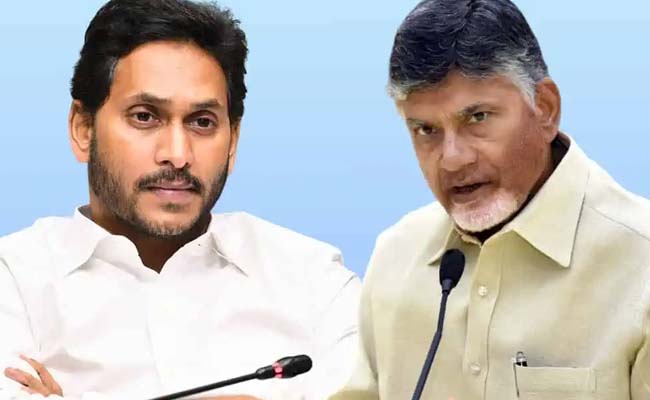
In a recent political showdown, YSR Congress party president and former Andhra Pradesh Chief Minister Y.S. Jagan Mohan Reddy accused current Chief Minister N. Chandrababu Naidu of what he termed “credit-chori,” or stealing credit, for housing schemes that were predominantly initiated, sanctioned, and executed by the YSR Congress Party (YSRCP).
Jagan Mohan Reddy did not hold back as he addressed supporters at a rally in Hyderabad, emphasizing that the housing projects in question were not only started during his tenure but also reflected the party’s commitment to uplift the underprivileged. “These schemes were our brainchild, and it is disheartening to see Naidu shamelessly take credit for our hard work,” he stated.
The former chief minister’s comments come at a time when Andhra Pradesh is heading towards key local elections, where both parties are vying for support. Jagan highlighted that the significant housing projects were designed to provide shelter to the poorest segments of society, empowering families that struggled for years.
To back his claims, Reddy provided specific examples of completed housing units, which he stated were a testament to the YSRCP’s governance. He accused Naidu of attempting to rewrite history for political gain, and urged the people of Andhra Pradesh to remember who genuinely bolstered the welfare initiatives that directly benefited them.
The exchange between the two leaders is part of a longstanding rivalry, with Naidu’s Telugu Desam Party (TDP) and the YSRCP often clashing over various issues, from development plans to governance strategies. Naidu, while responding to these allegations, dismissed them as “political rhetoric” aimed at misguiding the voters ahead of the elections.
In his rebuttal, Naidu asserted that his administration has significantly bolstered housing initiatives, ensuring they reach even those in rural areas. He emphasized his government’s efforts to improve infrastructure and living standards across the state, claiming that transparency and accountability are at the forefront of his administration’s policies.
The discourse on housing and welfare schemes highlights the critical issues facing Andhra Pradesh, as many citizens are dependent on such programs for their basic needs. Reddy pointed out that while Naidu may tout current accomplishments, the foundation of the housing schemes was laid during his previous term, further insisting that voters need to discern genuine contributions from those merely claiming them.
As the political tension escalates, the public remains watchful of how these accusations will influence their voting intentions. Observers suggest that opposition parties must effectively communicate their narratives to win over undecided voters who may feel the impact of these housing initiatives firsthand.
With elections approaching, the spotlight will remain on both leaders as they gear up for what promises to be a fiercely contested political battle, shaping the future governance of Andhra Pradesh. The ongoing clash over credit for welfare initiatives is just one of many fronts in this evolving political landscape, reinforcing the significance of legacy in state politics.