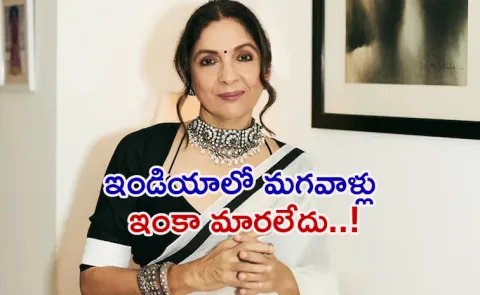
In a bold statement that has sparked conversations across the nation, renowned actress Neena Gupta recently addressed the societal expectations placed on women in India, particularly regarding virginity and marriage. Known for her candid views and independent lifestyle, Gupta’s remarks resonate deeply in a country still grappling with traditional norms.
Gupta, who gained fame alongside Bollywood legends like Madhuri Dixit and Sanjay Dutt, has always been unapologetic about her personal choices. As a single mother who welcomed her daughter Masaba into the world without being married, Gupta has challenged conventional narratives. Her daughter’s father, West Indies cricketer Viv Richards, is a part of her past, yet Gupta continues to live life on her own terms, consistently emphasizing that she does not wish to dictate her choices to others.
In a recent interview, Gupta highlighted the pervasive patriarchy and male dominance that continue to shape women’s lives post-marriage. She questioned the outdated obsession with virginity that still plagues Indian society, asking if such ideals hold any relevance today. “Are we really talking about India here? What has changed?” she challenged, underscoring the need for a reevaluation of societal norms.
Despite the modern facade that urban settings might present, Gupta argued that many men still seek wives who are virgins. “In cities, it may appear that men have a broader perspective, but that isn’t entirely true,” she asserted. “They still prefer a virgin as a wife.” This revelation serves as a stark reminder of the underlying traditional values that persist, despite proclamations of progress.
Gupta’s comments come at a time when the conversation around women’s rights and agency is gaining momentum. She illustrated her point with personal anecdotes from her family, shedding light on the challenges many women face even in contemporary settings. “I recall a relative who married a well-educated man in Mumbai but faced discrimination when she wanted to practice her faith freely,” Gupta shared. “She was not allowed to display her chosen deity in their home.” Such stories exemplify the ongoing struggle for autonomy that many women endure.
Another poignant example she provided involved her niece, who was similarly restricted by her in-laws regarding family photographs in her personal space. Gupta’s reflections reveal a troubling truth: despite advancements in some areas, the journey towards gender equality remains fraught with obstacles.
As Gupta continues to amplify her voice for women’s rights, her insights serve as a crucial reminder that societal change is an ongoing process. “We still have a long way to go in transforming the status of women in our country,” she concluded, urging for collective awareness and effort to challenge the status quo.
Neena Gupta’s comments have undoubtedly reignited important discussions about women’s rights in India, emphasizing the need for continued advocacy and change in societal attitudes. Her fearless approach not only inspires many but also highlights the crucial conversations that need to be had in the pursuit of equality and respect for all women.