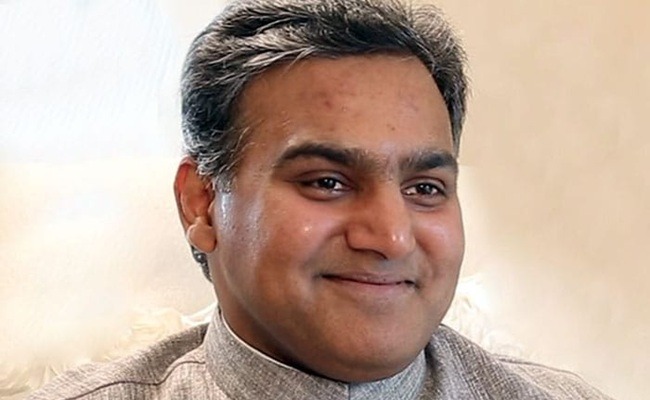
In a recent heated debate on the ongoing IndiGo Airlines crisis, Telugu Desam Party (TDP) spokesman faced significant backlash for what many deemed a communication blunder. During the live broadcast on Republic TV, hosted by the controversial Arnab Goswami, the TDP representative struggled to articulate his party’s stance clearly, leading to a muddled presentation that frustrated both the panel and viewers alike.
The debate, which aimed to address the various issues plaguing IndiGo Airlines in light of recent controversies, quickly turned chaotic as arguments ensued. TDP’s spokesman, in an attempt to defend the airline amidst rising criticisms, inadvertently veered off-topic, touching on unrelated issues that left audiences confused about his main points. The social media backlash was swift, with viewers critiquing the party’s performance and highlighting the importance of effective communication in high-stakes discussions.
In the aftermath of the debate, the TDP spokesman made an audacious move, taking to social media to challenge Arnab Goswami directly. He claimed that the environment created during the show made it difficult for party representatives to present their viewpoints accurately. “If debate is merely a platform for noise, I challenge Arnab to host a constructive dialogue for once,” he stated in an online post, seeking to engage Goswami in a more structured discussion format.
This confrontation has sparked renewed interest in the role of media in political debates. Many analysts argue that the fast-paced, often combative nature of programs like those hosted by Goswami can inhibit productive exchanges, leading to miscommunication and misrepresentation. This latest incident sheds light on the need for clearer rules and a more respectful discourse in political media.
While the TDP spokesman’s challenge may resonate with those disillusioned by sensationalist journalism, it also risks drawing more scrutiny onto the party’s inability to communicate effectively under pressure. Political strategists point out that this could serve as a wake-up call for the TDP to bolster its communication strategies to avoid future mishaps in public forums.
The fallout from this debate is bound to linger, as scrutiny of both the TDP’s messaging and the format of political debates continues to evolve. As the political landscape changes, parties across the spectrum may need to adapt by prioritizing clearer communication and a return to civil discourse, especially when engaging with the public through media outlets.
In the end, the incident highlights a critical intersection of politics and media, raising questions about responsibility on both sides of the camera. As electoral challenges loom, the effectiveness of political representation in media could very well be a determining factor in voter perceptions and party success.


