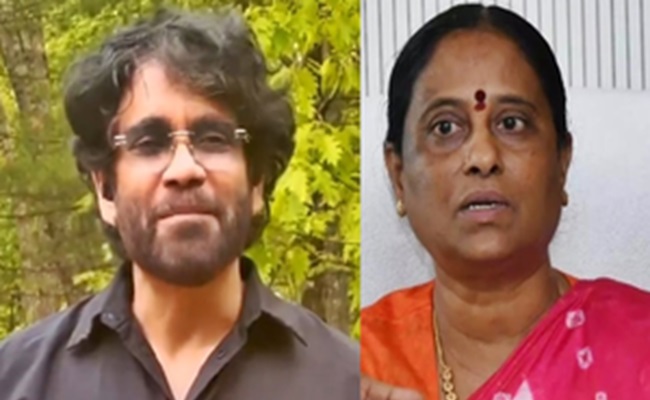
In a surprising turn of events, Telangana minister Konda Surekha has publicly apologized for her controversial remarks aimed at renowned actor Nagarjuna, his family, and actress Samantha. The apology comes amid growing fears of a potential defamation lawsuit that could arise from her earlier comments, which have sparked significant backlash among fans and the film industry alike.
Surekha’s earlier statements, made during a political rally, suggested that the film fraternity was engaging in unethical behavior, particularly targeting Nagarjuna and Samantha for their personal lives. Her comments ignited a wave of indignation, prompting criticism from various corners, including fans of the popular actors, who took to social media to express their outrage.
As a member of the Telangana government, Surekha’s remarks were not just personal opinions but were seen as reflections of her position, further complicating the situation. Recognizing the potential repercussions, including a legal suit, she issued an official apology, emphasizing that her words were taken out of context and regret over any offense caused.
The apology statement released by Surekha acknowledged the impact of her comments on the sentiments of the public and the individuals involved. “I sincerely apologize to Nagarjuna, Samantha, and their families for any hurt my statements may have caused. My intention was never to malign anyone,” she stated. This contrition aims to quell the escalating controversy that had the potential to escalate into a defamation case.
In the wake of her apology, Nagarjuna and Samantha have remained silent, choosing not to publicly respond to the minister’s remarks or her subsequent retraction. Observers suggest that maintaining this stance allows them to rise above the fray while ensuring that the focus remains on their professional endeavors rather than personal disputes.
This incident raises questions about the intersection of political discourse and public figures in India, where the lines often blur between personal criticism and professional criticism. The ramifications of high-profile politicians commenting on celebrities can have widespread implications, affecting public perception and the integrity of both fields.
As this story unfolds, the media will be closely monitoring any further developments. There is a growing anticipation of how this episode will influence the relationship between the government and the film industry in Telangana. In a region where cinema holds a significant cultural sway, especially among the youth, such controversies can shape the narrative and public sentiment in unexpected ways.
While Surekha’s public apology may serve as a temporary balm to the controversy, it remains to be seen whether her gesture will be sufficient to mend the strained relations or perhaps signify a more substantial shift in how political leaders approach discussions involving influential cultural figures in the future.