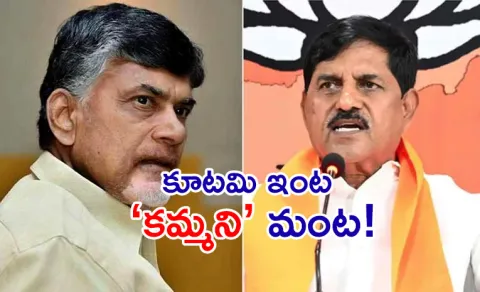
Andhra Pradesh’s political landscape is witnessing a significant upheaval following comments made by BJP MLA Adinarayana Reddy, who claimed that governance in the state is “Kamma-dominated.” This statement has ignited a political storm, highlighting growing dissent among coalition partners, particularly targeting the Telugu Desam Party (TDP) and its perceived favoritism towards the Kamma social group. The remarks suggest that tensions are escalating within the ruling coalition, indicating that the BJP and Jana Sena party members are increasingly frustrated with TDP’s governance style.
Chief Minister N. Chandrababu Naidu appears to be preoccupied with consolidating power for his son, Lokesh, leading to concerns that governance is faltering. As the political climate grows tense, the dynamic between the TDP and its allies is becoming increasingly strained, especially in light of accusations surrounding the distribution of Tirupati laddu prasadam, which has drawn criticism from coalition partners for alleged mismanagement and favoritism.
Reddy’s comments were met with applause from fellow BJP leaders during a recent meeting, signaling a growing consensus among the BJP ranks regarding the perceived dominance of the Kamma community within the TDP. He advised leaders from the Kamma community to be more inclusive and consider the interests of other social groups to foster unity. Reddy warned that without the BJP’s support, TDP and Jana Sena would struggle to maintain their political relevance.
Further exacerbating the situation, Reddy dismissed Naidu’s conspiracy theories regarding the laddu prasadam as unfounded, asserting that the YSR Congress Party (YSRCP) was performing better in this regard. Having transitioned from the YSRCP to the TDP, Reddy’s political journey underscores the complexities within Andhra Pradesh’s political fabric, especially as he experiences internal friction with TDP leaders like CM Ramesh.
Critics within the TDP and its allied parties express concerns that Lokesh is receiving preferential treatment over seasoned politicians, leading to the perception that he is operating as a shadow chief minister. Allegations of arrogance, coupled with reports of internal strife within the party, are casting a shadow over the TDP’s governance.
The Jana Sena party, which is heavily reliant on the Kapu social group, appears to be struggling to assert itself amidst the TDP’s dominance. Recent statements from Jana Sena leaders, including MLA Srinivasulu, affirming the integrity of the laddu prasadam, indicate a reluctance to confront TDP directly, even as tensions simmer regarding the allocation of resources and political influence.
As the BJP’s central leadership remains relatively disengaged from the unfolding drama, local party leaders like Madhav are reportedly under pressure to align with Naidu’s narratives, further complicating the coalition dynamics. Observers note that numerous grievances are festering among coalition partners, particularly regarding the TDP’s monopolization of liquor shops and its preferential treatment of certain social groups.
The underlying discontent within the BJP and Jana Sena is palpable, with accusations that the TDP is intentionally sidelining other communities while favoring the Kamma group. This sentiment is echoed across political spheres, as the narrative of a Kamma-centric governance model spreads among various social groups in the state.
Overall, the political situation in Andhra Pradesh is precarious, with coalition partners increasingly vocal about their dissatisfaction. With the BJP and Jana Sena feeling marginalized within the TDP-led government, the potential for further political fragmentation looms. As the political landscape shifts, the future of governance in Andhra Pradesh hangs in the balance, with leaders like Reddy serving as harbingers of a broader discontent that could reshape the state’s political dynamics.