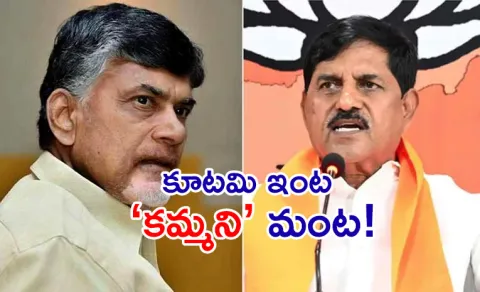
Recent political turmoil in Andhra Pradesh has sparked significant debate following comments made by BJP MLA Aadinaraayana Reddy, who suggested the administration is “Kamma” dominated. This statement has turned into a political bombshell, reflecting growing opposition against the ruling Telugu Desam Party (TDP) and its perceived favoritism towards the Kamma social group.
Chief Minister N. Chandrababu Naidu appears to be grappling with internal party dynamics, focusing on securing a political future for his son, Lokesh. The perception that governance has deteriorated under TDP’s leadership is gaining traction, especially as the party faces backlash from coalition partners BJP and Jana Sena over various issues, including the controversial Tirupati laddu distribution.
Aadinaraayana Reddy’s remarks during a meeting, where he received applause from fellow BJP leaders, underscore the discontent within the coalition. He advised the Kamma leadership to unite with other groups, warning that TDP and Jana Sena would struggle to exist without BJP’s support. Reddy also dismissed Naidu’s conspiracy theories surrounding the laddu distribution, asserting that the YSR Congress has the upper hand in this matter.
Having transitioned from YSR Congress to TDP and serving in Naidu’s cabinet from 2014 to 2019, Reddy’s comments highlight a significant shift in political alliances. After TDP’s defeat in the 2019 elections, BJP capitalized on the situation, allowing Reddy to regain his MLA position. However, tensions remain, particularly with CM Ramesh, a close aide of Naidu, as factionalism continues to plague the party.
Critics from within TDP, BJP, and Jana Sena suggest that Lokesh’s influence is overshadowing Naidu’s leadership. Allegations of Lokesh operating as a “shadow chief minister” have emerged, with accusations of arrogance and misuse of authority directed at him. Many believe that the party has become increasingly alienating, particularly towards coalition partners.
Jana Sena leader Pawan Kalyan has been noticeably quiet amid these tensions, as his party grapples with its identity and past affiliations with TDP. The recent comments from Tirupati’s Jana Sena MLA regarding the purity of the laddu distribution signal a potential fracture within the alliances. Meanwhile, Naidu’s attempts to pressure BJP leaders into supporting his narrative regarding the laddu controversy have not gained much traction at the national level.
The ongoing conflict within the coalition raises questions about the stability of TDP’s governance as allegations of corruption and favoritism surface. Reports indicate that the TDP has a significant control over liquor shops in the state, leading to concerns among coalition partners regarding the equitable distribution of resources. Despite presenting a united front, the underlying dissatisfaction is evident, particularly from the BJP, which feels sidelined in decision-making processes.
Moreover, the Kamma community’s perceived dominance within TDP continues to fuel resentment among other social groups. The party’s strategic maneuvers, including utilizing Pawan Kalyan to appeal to the Kapu community, have not yielded the expected results, resulting in increased dissatisfaction among the Kapu electorate.
Allegations of political vendettas, including legal actions against former minister Ambati Rambabu, have further complicated the political landscape. The recent violent incidents attributed to TDP activists have raised alarms across various social groups, leading to calls for accountability and change in the party’s approach.
The current political climate suggests that Aadinaraayana Reddy’s statements may serve as a wake-up call for TDP as it navigates through increasingly complex social and political dynamics. The fears of alienating diverse communities could have far-reaching implications for the party, echoing the sentiments from previous electoral terms where TDP faced similar challenges.