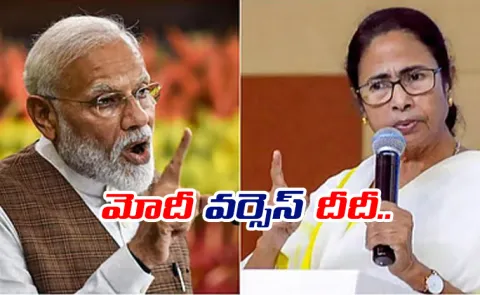
As the West Bengal Assembly elections approach, political parties are shifting their battlefront from traditional ground campaigns to digital platforms. A recent analysis by the India Today team of data collected from Meta and Google Ads Transparency libraries reveals fascinating insights into this shift. The digital war waged between December 18 and January 16 has created ripples in the political landscape, with parties spending a staggering ₹6.38 crores on advertisements across Facebook, Instagram, Google, and YouTube during this short period.
Data indicates that the ruling Trinamool Congress (TMC) is significantly outspending its main rival, the Bharatiya Janata Party (BJP), in the digital advertising arena. The TMC, leveraging its strategist I-PAC, invested approximately ₹2.4 crores last month on Google and Meta platforms. Not only are they utilizing their official pages, but they are also promoting through various surrogate pages such as “Abar Jitbe Bangla” and “Aami Banglar Digital Joddha,” which collectively spent an additional ₹32 lakhs. Although these pages do not directly use the party symbol, they effectively disseminate content favorable to Chief Minister Mamata Banerjee.
Pages like “Bolche Bangla” have taken a step further, launching strategic attacks on the BJP using content from Prayag Raj Magh Mela videos to criticize the opposition. In contrast, the BJP has focused its official campaign on social media, spending ₹72 lakhs on Meta and ₹63 lakhs on Google. Compared to previous elections, the BJP appears to be prioritizing official campaigns over surrogate pages this time around.
Meanwhile, government agencies are also promoting their schemes through digital means. The West Bengal Department of Information and Cultural Affairs has spent ₹2.1 crores in a month on advertising state welfare programs. Additionally, the Central Bureau of Communication has allocated around ₹19 lakhs for promoting central government initiatives. While the BJP has been effective in launching nationwide digital campaigns, it seems to lag in West Bengal, where the TMC still holds a considerable advantage based on statistics from the 2021 Assembly elections.
Current trends reveal that the TMC is prioritizing policy-driven advertisements through Google Ads, while the BJP is focusing on emotionally charged content on Meta platforms. As the BJP, currently in power at the center, aims to capture the stronghold of Bengal, the TMC is countering these attempts with robust strategies. This digital battleground is not just a reflection of the changing political dynamics but also marks a significant evolution in how parties communicate with voters in the modern age.
As the countdown to the elections continues, it remains to be seen how effective these digital strategies will be in swaying the electorate. With technology playing a crucial role, the political landscape in West Bengal is set for an unprecedented transformation in the run-up to the polls.