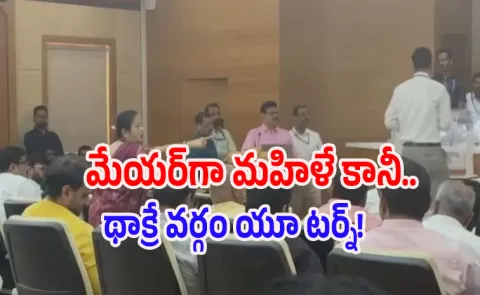
Mumbai’s political landscape has taken an unexpected turn with the selection process for the mayoral position. In a surprising development, the reservation lottery for the Mumbai mayor’s post has concluded, designating it under the ‘General Women’ category. This decision has sparked significant controversy, particularly from Uddhav Thackeray’s faction of the Shiv Sena, which has publicly expressed its opposition to the lottery results.
The stakes are high as Mumbai prepares to elect its second consecutive woman mayor. However, the debate surrounding the category from which this mayor should emerge has created a climate of uncertainty. The lottery was conducted to determine which category the mayor’s post would fall under, and the selection of ‘General Women’ has intensified discussions among political leaders, particularly with the Shiv Sena’s leadership questioning the rationale behind excluding the Other Backward Classes (OBC) from consideration.
Former mayor Kishori Pednekar criticized the process, highlighting that there are numerous areas in Mumbai populated by the OBC community. She questioned why representatives from this community were not included in the lottery, stating that their absence from the selection process was a significant oversight. Pednekar’s remarks reflect a broader concern regarding representation and inclusivity within the political framework of Mumbai.
The situation escalated further when members of the Thackeray faction walked out of the assembly in protest against the reservation lottery’s outcome. This action underscores the division within the political parties and the growing tension as the mayoral election approaches. The reserved posts for women in various municipalities, including Pune, Dule, and Navi Mumbai, further complicate the dynamics as candidates prepare to submit their nominations following the lottery announcement.
Additionally, the lottery results have implications beyond Mumbai. Several other municipal corporations, such as Latur and Jalna, have also reserved posts for Scheduled Castes (SC) and Other Backward Classes (OBC). Specifically, Latur and Jalna have reserved positions for SC women, while municipalities like Akola and Chandrapur have designated posts for OBC women candidates. This broader reservation strategy highlights the ongoing efforts to enhance representation for marginalized communities across Maharashtra.
As the political discourse continues, the upcoming mayoral election in Mumbai promises to be a defining moment for women’s leadership in the city. With the Shiv Sena’s opposition to the lottery results, the tension is palpable, and the outcome will likely influence future policies surrounding electoral reservations and representation. As the political landscape evolves, all eyes will remain on Mumbai, keenly watching how this unfolding situation will shape the future of its governance.