In the age of social media, Andhra Pradesh Chief Minister N. Chandrababu Naidu finds himself at the center of controversy as historical narratives are brought to light. The growing influence of social media is revealing aspects of Naidu’s political journey that he has often sought to reshape, prompting questions about his true image as a staunch advocate for Hindu values.
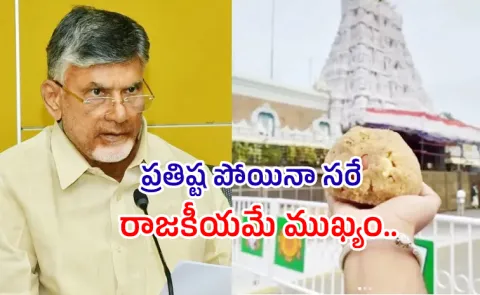
Recent posts on social media have ignited a fierce debate surrounding claims that animal fat was mixed into the sacred Tirupati laddu, a traditional offering. This allegation has backfired on Naidu as he attempted to cast aspersions on the opposition YSR Congress Party (YSRCP). In light of these allegations, Naidu was compelled to convene a meeting with nine leaders to address specific accusations made by former Chief Minister Y.S. Jagan Mohan Reddy. During this meeting, Naidu reiterated his stance, labeling the controversy as part of a conspiracy aimed at undermining Hindu beliefs.
Naidu’s historical references to the time when Y.S. Rajasekhara Reddy was in power have also resurfaced. He claimed to have opposed the portrayal of the Tirumala hills as merely two hills, a misrepresentation he asserted he had fought against in the past. However, social media activists have pointed to evidence that raises doubts about Naidu’s narrative, suggesting that he may not have been as principled as he claims.
The political landscape has been fraught with accusations since Rajasekhara Reddy’s tenure began in 2004, with Naidu’s party, the Telugu Desam Party (TDP), allegedly orchestrating campaigns to brand him as anti-Hindu. Controversial remarks from TDP leaders during local elections further fueled tensions, as they insisted that the elections should not be held in the historically sacred area of Tirumala.
During Rajasekhara Reddy’s administration, efforts were made to clarify the status of the Tirumala hills and to protect Hindu religious sentiments by issuing government orders that outlined the sacred nature of the area, while also banning conversions in specific zones. Naidu, however, opposed the establishment of a dedicated channel for promoting Hindu beliefs, dismissing it as wasteful expenditure, despite the channel’s potential to elevate religious outreach.
The recent furore over laddu purity has reached a peak, with accusations of a conspiracy against Naidu for his alleged endorsement of animal products in sacred offerings. This has led to speculation that Naidu’s attempts to portray himself as a champion of Hinduism are inconsistent with his past actions and statements. Critics argue that his political maneuvers are desperate attempts to gain favor among Hindu voters while simultaneously courting other communities.
As the controversy unfolds, Naidu’s credibility appears to be at stake, particularly with the rise of social media scrutiny. His recent statements about past engagements with leaders of other faiths and the accusations of favoritism towards Christian communities have come under fire, with many questioning his integrity and commitment to Hindu values.
The fallout from these allegations has caught the attention of not just political rivals but also the public, with many expressing skepticism about Naidu’s current narrative. As the 2024 elections loom, these controversies may significantly impact his political future and the trust of his constituents. With social media continuing to shape political discourse, Naidu’s journey reflects the intricate relationship between history, perception, and the evolving landscape of contemporary politics in Andhra Pradesh.