In a recent turn of events surrounding the Tirupati laddu controversy, CPI leader Narayana has made explosive remarks calling for political leaders to exercise restraint. The ongoing debate among coalition leaders over the laddu, an iconic sweet offered at the Tirumala temple, has sparked a heated discussion, drawing attention to the intersection of politics and religion.
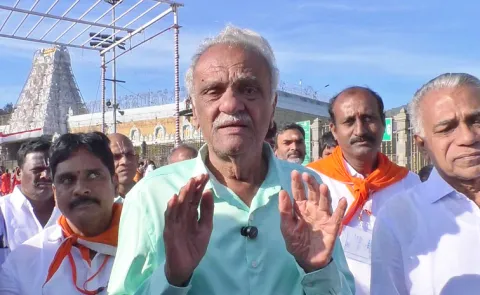
Speaking at a press conference in Tirumala, Narayana emphasized the importance of keeping political rhetoric in check. He criticized politicians who have been using the laddu issue to gain political mileage, stating, “Political leaders should control their tongues regarding the Tirupati laddu controversy. Those responsible for any wrongdoing must be held accountable, including the former executive officer.” His statements highlight the complications arising from the intertwining of faith and politics, urging leaders to refrain from exploiting religious sentiments for their own gain.
As the Supreme Court is currently hearing related matters, Narayana has urged political figures to cease their comments on the laddu situation. “If you wish to fight for your political agendas, do so without dragging God into it. Do not subject millions of devotees to emotional distress for political advantage,” he declared, advocating for the preservation of the devotees’ sentiments.
The laddu, which holds immense cultural and religious significance for many, has become a focal point for various political factions. Critics argue that the ongoing discussions around it are more about political maneuvering than genuine concern for the devotees. Narayana’s comments resonate with many who believe that the sanctity of religious offerings should remain untouched by political agendas.
His remarks come at a time when tensions are already high, and many followers of the temple feel that their beliefs are being manipulated. Narayana’s call for a halt to unnecessary discussions on the laddu is seen as a plea to prioritize the faith and emotions of millions over the ambitions of a few politicians.
As the situation develops, it remains to be seen whether other political leaders will heed Narayana’s call for restraint or continue to engage in the controversy surrounding the Tirupati laddu. The interplay of religion and politics in this case reflects broader issues within Indian society, where faith often becomes a battleground for political gain.
In conclusion, Narayana’s statements serve as a reminder of the need for sensitivity in political discourse, especially when it involves deeply held beliefs. The hope among many devotees is that political leaders will recognize the impact of their words and actions on the spiritual community and choose to act with integrity and respect.