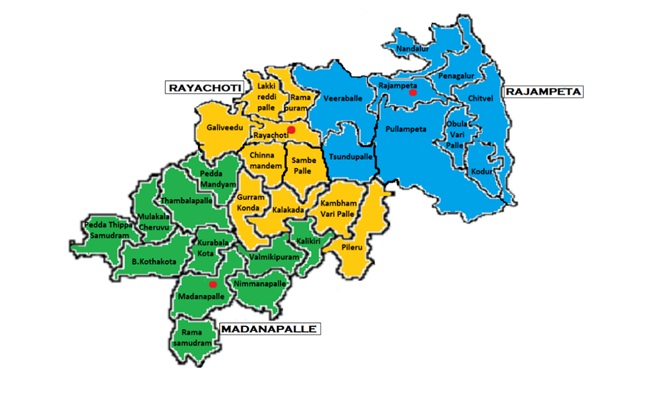
The demand for Rajampeta to be designated as the headquarters of Annamayya district is growing stronger, following the government’s controversial decision to maintain Rayachoti as the district’s center. This decision has sparked widespread discontent among local residents who believe it is neither rational nor justified, particularly in light of the recent formation of the new Madanapalle district.
Critics argue that the government’s choice to retain Rayachoti—an area that many feel is less accessible and less developed than Rajampeta—overlooks the logistical and developmental needs of the region. Proponents of Rajampeta as the new headquarters highlight its strategic location and better infrastructure, which could foster improved governance and accessibility for residents. They believe that moving the headquarters could lead to more equitable resource distribution and enhance local economic opportunities.
The discontent has manifested in protests and public meetings, where residents have voiced their frustrations over the administrative decision. Local leaders and community activists are calling for a reevaluation of the headquarters designation, claiming that Rayachoti’s choice only serves a select few at the expense of the wider community. “We deserve a headquarter that truly represents the population and the aspirations of Annamayya district,” stated one protester, echoing the sentiments of many.
Adding to the complexity of the situation, several residents and local businesses express concern over the potential implications of Rayachoti’s retention as the headquarters. Many fear it could hinder economic growth in an already struggling district. “Rajampeta has the potential to become a commercial hub; we need leadership to recognize that,” remarked a local business owner who supports the switch.
In response to the mounting pressure, local officials have sought to engage with the community to understand their grievances more fully. However, many locals remain skeptical of officials’ intentions, fearing that their voices will not be adequately heard in the decision-making process. “We’ve voiced our concerns, but we need concrete action,” commented a community leader during a recent town hall meeting. The call for a more transparent process has become a central theme in the current wave of protests.
This issue has also reached higher political levels, with several local politicians backing the movement for Rajampeta. They argue that a shift in headquarters could also align with overall state development goals and help address inequalities in administrative access. As the debate intensifies, it remains to be seen how the government will respond to these compelling arguments and the growing public demand.
With momentum building behind this cause, the situation warrants close attention as the residents of Annamayya district continue to rally for what they see as a rightful and necessary change. As the dialogue continues, the implications for grassroots governance and community representation in the region may very well hinge on the outcome of this ongoing struggle.