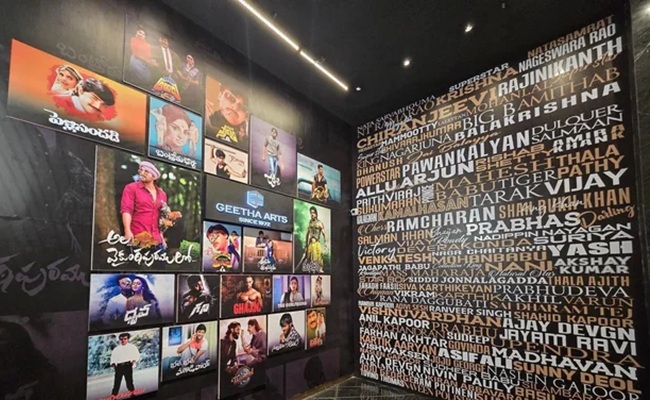
The newly launched Allu Cinema has swiftly garnered attention and sparked conversations throughout the Telugu film industry. However, not all the buzz surrounding this ambitious venture is positive. Critics and industry insiders are raising eyebrows over what they perceive as a significant miscalculation by the Allu family, who are already well-established in the realm of cinema and entertainment.
Allu Cinema, envisioned as a state-of-the-art film exhibition space, initially promised to revolutionize the way audiences experience movies in the Telugu-speaking region. With luxurious seating, cutting-edge technology, and a diverse film selection, the venue was expected to attract film enthusiasts and families alike. Yet, as the first few weeks of operation unfold, many are questioning whether the Allu family has misjudged the market dynamics and consumer preferences.
One of the primary concerns raised by critics is the pricing strategy adopted by Allu Cinema. The ticket prices have been perceived as excessively high compared to other theaters in the area. This decision seems particularly ill-timed, given the current economic climate where many families are tightening their budgets. Critics argue that such a strategy may alienate potential customers and limit the theater’s ability to establish a loyal audience base.
Moreover, there are questions regarding the film selection at Allu Cinema. While the venue has showcased a few major releases, many patrons have expressed disappointment at the lack of regional films that resonate with local audiences. Some industry experts believe that by not prioritizing Telugu films, the Allu family risks losing the support of a crucial demographic that is integral to the success of any cinema in the region.
In addition to ticket pricing and film selection, the overall customer experience has also come under scrutiny. Early reviews from attendees highlight inconsistencies in service quality and operational efficiency. From long concession lines to issues with sound quality during screenings, it appears that some operational hiccups have detracted from the grand vision initially promised by the Allu family.
Despite these challenges, there remains a glimmer of hope for Allu Cinema. Supporters of the venture argue that it is still in its infancy and that improvements can be made based on customer feedback. They believe that with time, the Allu family has the potential to recalibrate its approach, refine its offerings, and ultimately create a beloved community hub for film lovers.
As the debate continues, industry insiders are closely monitoring the developments surrounding Allu Cinema. The outcome of this venture could have significant implications not only for the Allu family but also for the broader Telugu film landscape. Will they learn from their early missteps and adapt to the needs of the audience, or will this become a cautionary tale of overreach in an industry that thrives on understanding its viewers? Only time will tell.