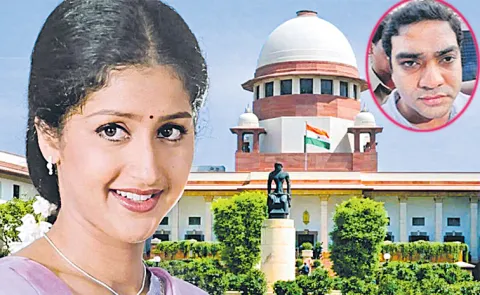
In a landmark ruling, the Supreme Court of India has convicted Siddharth Reddy, the main accused in the high-profile death case of actress Pratyusha Banerjee, ordering him to surrender within four weeks to serve his sentence. This decision comes two decades after the tragic incident that shocked the film industry and the public alike. Justices Manoj Mishra and Manmohan delivered the verdict on Tuesday, concluding a protracted legal battle that began with Banerjee’s untimely death in 2002.
The Supreme Court’s ruling was the culmination of numerous hearings and appeals, including a challenge by Reddy against the sentence imposed by the Telangana High Court. Pratyusha’s mother, Sarojini Devi, had also filed petitions seeking a harsher penalty for Reddy. In a detailed judgment, the court dismissed Reddy’s claims of innocence and upheld the lower court’s findings against him.
The court outlined twelve key points in its judgment, emphasizing that the evidence presented did not support the narrative of murder. The allegation that Reddy strangled Pratyusha was deemed unsupported by adequate proof. Instead, the court concluded that her death was caused by poisoning, as confirmed by medical reports and eyewitness testimonies.
Importantly, the court found no substantiating evidence for allegations of sexual assault against Reddy. It noted that the timelines of the accusations were problematic, as they were raised long after the events in question, complicating their consideration within the trial.
Additionally, the court criticized the conduct of Dr. B. Muniswamy, who provided the crucial post-mortem report, labeling his actions as “unprofessional.” The court pointed out that premature leaks of the report had severely impacted the case, leading to significant ramifications.
Witness number 34 was highlighted as particularly credible, playing a crucial role in the final verdict. The court established that the circumstances and testimonies clearly pointed against Reddy, rejecting his defense claims that the poisoning was accidental.
Evidence showed that Reddy had purchased the pesticide ‘Nuvacron,’ which was used in the incident, reinforcing the court’s view that he was complicit in Pratyusha’s death. The court also clarified that it could not apply a previous ruling from a different case to this current trial, as the circumstances were distinctly different.
This case dates back to February 23, 2002, when the couple attempted suicide after facing opposition to their relationship. They ingested poison mixed in a soft drink and were rushed to a hospital, where Pratyusha succumbed to her injuries the following day, while Reddy survived. The incident led to widespread speculation and allegations, with Pratyusha’s family asserting that Reddy had orchestrated her death to look like a suicide.
The initial trial court had found Reddy guilty of abetting suicide, sentencing him to five years in prison and a fine. Reddy’s subsequent appeal to the High Court resulted in a reduced sentence of two years. However, the Supreme Court’s ruling reinstates a more stringent view of Reddy’s culpability, marking a significant moment in the pursuit of justice for Pratyusha Banerjee.