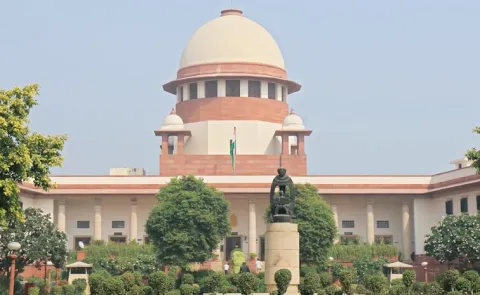
New Delhi: The Supreme Court has ordered the DMK government to respond regarding actions taken against protestors who allegedly made religious accusations against Justice GR Swaminathan, a Madras High Court judge who permitted the lighting of Karthigai Deepam on the Thirupparankundram hill in Madurai. This directive comes as part of a petition filed urging for measures against the protestors involved in the unrest.
The bench, headed by Justices Aravind Kumar and PB Varale, issued notices to the Tamil Nadu state government, the state’s Director General of Police, the Chennai Police Commissioner, and others involved in the case. The court has also requested a report on the progress of the case from the DMK government, highlighting the seriousness of the allegations made against the judge.
The situation escalated when DMK allies, party workers, and lawyers organized protests against Justice Swaminathan in Chennai and Madurai, claiming that the judge’s actions had led to a violation of religious sentiments. This prompted lawyer GS Mani to file the petition, seeking accountability for the protestors’ conduct during these demonstrations.
The Supreme Court has scheduled the next hearing for February 2, indicating that the panel is keen to address the issue promptly. The case has garnered significant attention, reflecting the ongoing tensions surrounding judicial independence and religious sentiments in the region.
Justice GR Swaminathan’s ruling to allow the lighting of Karthigai Deepam has been controversial, with critics arguing that it could incite communal tensions. Supporters, on the other hand, view the decision as a recognition of cultural and religious practices in Tamil Nadu. The complexity of such cases highlights the delicate balance between upholding judicial decisions and managing public sentiment.
This incident underscores the broader challenges faced by the judiciary in India, where decisions can lead to public outcry and political repercussions. As the Supreme Court awaits the DMK government’s response, the situation remains a focal point for discussions about the interface of law, religion, and politics in contemporary India.
The outcome of this case could set a significant precedent regarding how allegations of communalism against judges are handled, potentially influencing future interactions between the judiciary and the public sphere. With the next hearing approaching, all eyes will be on the Supreme Court as it navigates this sensitive matter.