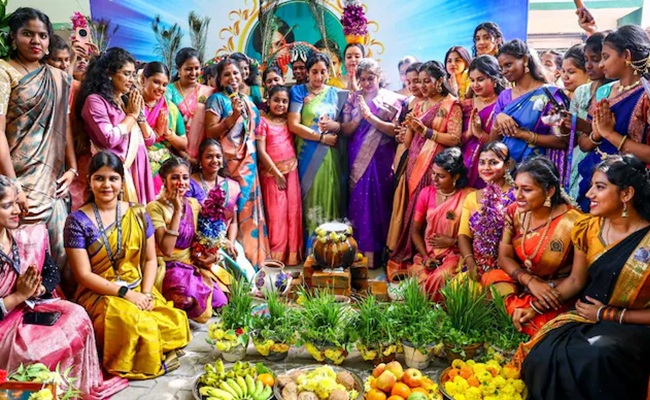
This year’s Sankranthi, a traditional harvest festival celebrated in many parts of India, has taken an unexpected turn, becoming a battleground for caste pride and social media theatrics. The vibrant festival, typically marked by joyous gatherings, colorful kites, and sumptuous feasts, has been overshadowed by rising tensions surrounding caste identities and ownership of cultural practices.
Sankranthi, which usually brings communities together to celebrate the end of the winter solstice, has in recent years morphed into a complex canvas of cultural expression intertwined with social commentary. This year, however, the festival has become a focal point for discussions surrounding caste, as various groups claim ownership over the celebrations and rituals associated with Sankranthi. The situation has escalated, with social media serving as a platform for both celebration and contention.
Caste pride, long a contentious issue in Indian society, has emerged prominently in discussions leading up to Sankranthi. Different communities are asserting their claims to the festival, which has historically been a unifying celebration. The rise of social media has amplified these voices, with hashtags trending and posts going viral as people express their views on what Sankranthi represents to them and their communities.
Critics argue that the commercialization and politicization of this once-simple harvest festival detracts from its essence. The focus has shifted from communal harmony to a divisive contest of identity. “Sankranthi should be a time to come together and celebrate our agricultural heritage, not to draw lines in the sand over who has the right to celebrate,” commented cultural historian Dr. Anjali Rao.
In some regions, the festival has witnessed processions and public demonstrations where various caste groups have publicly displayed their pride. These events have drawn attention not only for their cultural significance but also for the underlying tensions they reveal. The clash of identities has led to heated debates about inclusivity and representation within the festival’s observances.
The rise of social media has made it easier for these discussions to gain momentum, with influencers and activists sharing their views on the significance of caste in contemporary celebrations. While some see this as a necessary conversation about cultural ownership, others view it as an unwelcome distraction from the festival’s original purpose. Amidst the hashtags and heated exchanges, many are left wondering how to navigate these evolving narratives while still honoring the spirit of Sankranthi.
As the festival approaches, community leaders are calling for a return to the roots of Sankranthi, urging participants to focus on the celebration of agricultural abundance and the spirit of giving. “Let’s celebrate the harvest, not our divisions,” said local farmer and community organizer Ravi Kumar. “The essence of Sankranthi is about gratitude and sharing, not about who can shout the loudest.”
This year’s Sankranthi will undoubtedly be a memorable one, not just for the celebrations but for the discussions it has sparked about identity, belonging, and the future of cultural traditions in a rapidly changing society. As communities prepare to come together, the hope remains that the festival can reclaim its spirit of unity, transcending the divisive narratives that have emerged in recent weeks.